Can Schools Help Children With Social Media Risk?

England’s children commissioner stated that schools should play a bigger role in preparing children for the emotional demands that they may face when transitioning from Primary to Secondary school.
CAN SCHOOLS HELP CHILDREN WITH SOCIAL MEDIA RISK?
The emotional risks seem to be higher when children begin secondary school. A pattern has emerged of children craving likes as a form of gratitude. Also, signs of anxiety become apparent when the amount of popularity that they receive from their post isn’t what they desire. When starting school there are enough pressures without the added strain of whether you are digitally popular or not. So what can we do to help?
Educate children properly on social media best practices. Develop children’s critical awareness and resilience and understanding of algorithms, focusing on the transition stage from primary to secondary school. Most social media platforms have a minimum age limit of 13. However, 3 in 4 children aged 10-12 have their own accounts.
ANNE LONGFIELD’S STUDY
Anne Longfield said she was worried many pupils at that stage became anxious about their identity and craved likes and comments for validation.
Her study said children aged eight to 12 found it hard to manage the impact.
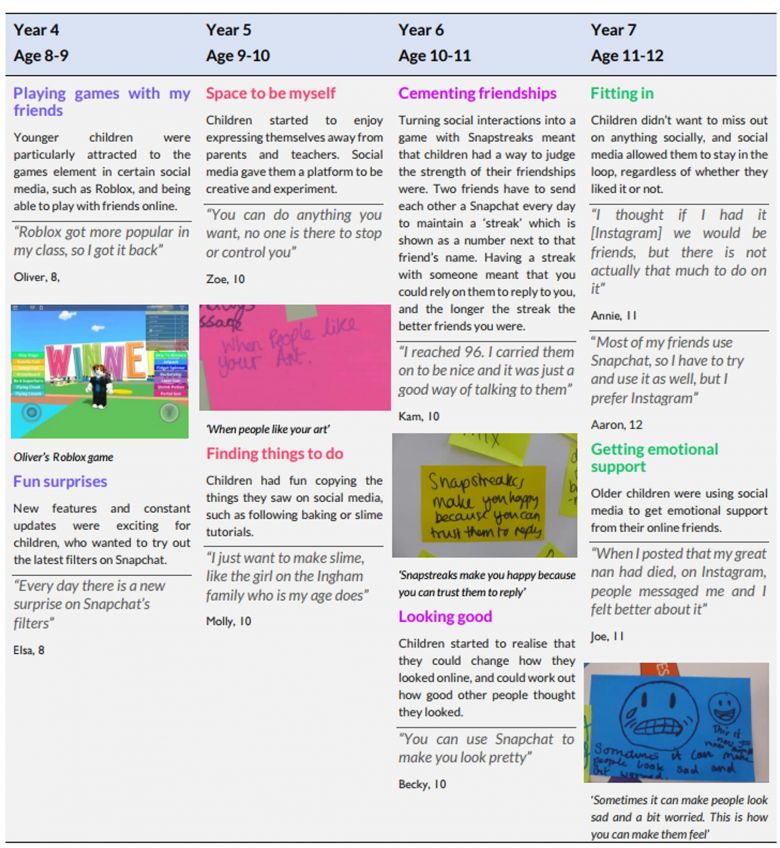
The report spoke to 32 children in eight focus groups, aged eight to 12, and found some saying:
“If I got 150 likes, I’d be like, ‘that’s pretty cool, it means they like you'” – Aaron, 11 “I just edit my photos to make sure I look nice” – Annie, 11 “My mum takes pictures of me on Snapchat… I don’t like it when your friends and family take a picture of you when you don’t want them to” – Hassan, eight “I saw a pretty girl and everything she has I want, my aim is to be like her” – Bridie, 11
Ms Longfield called on schools and parents to prepare children emotionally for the “significant risks” of social media as they move schools and meet new classmates – many of whom have their own phones.
Ms Longfield said social media provided “great benefits” to children but was also exposing them to “significant risks emotionally”.
She suggested compulsory digital literacy and online resilience lessons for year six and seven pupils so that they learn about the “emotional side of social media”.